Greetings from Brooklyn... fuggedaboudit!

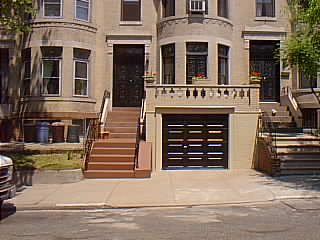
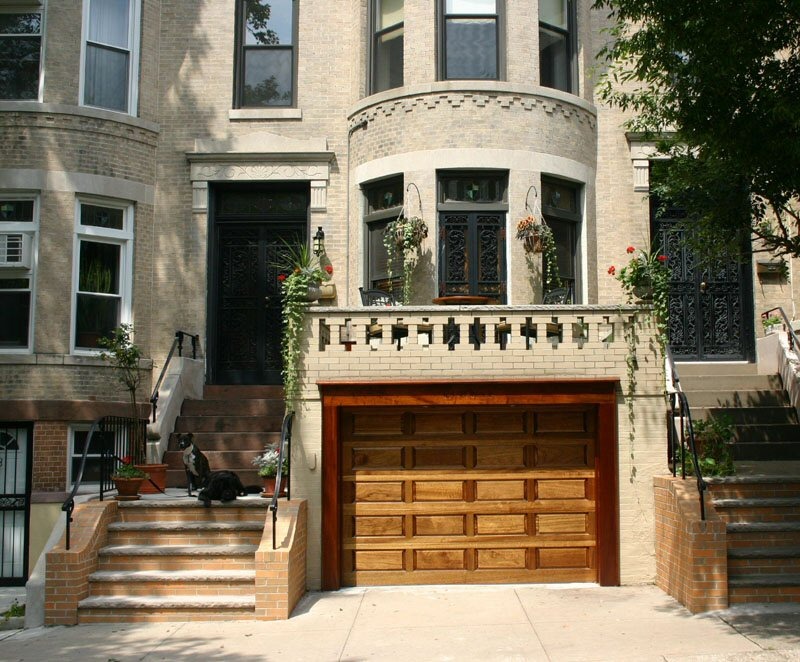
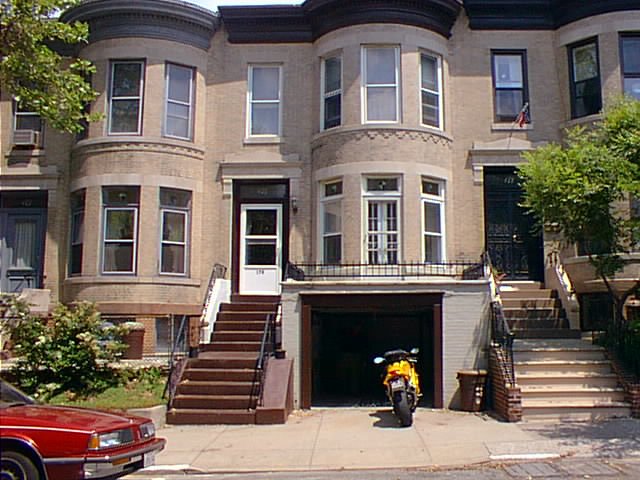
This blog is about the challenges of renovating an old Brooklyn, New York row house.

My last renovation project was the master bedroom, most of which is about finish carpentry. You can follow the progress here. Thanks to the miracle of Drupal, you can also read it going backwards in time if you prefer. You'll find other completed home improvement projects in the Renovation Photo Diary.

You can also read me on Old House Web.

Do you have a home improvement blog of your own? If so and you would like to see it promoted, please visit HomeOwnersLike.Us.


Insteon, Apple style

Since moving to this house, I had gone from running one 24/7 computer server to three -- actually four if you consider a hibernating laptop. The web site you're looking at right now ran on one of them -- a FreeBSD Unix server. A Windows box ran my home automation set up. The other computer, running Ubuntu Linux, was mostly work related.

Thing is, the juice needed to run these servers and the related hardware was killing me, including the air conditioning needed to counteract the heat they produced in my small office. The three computers together drew about 700 watt/hours. Add a monitor, KVM, DSL modem, router, hub and backup and I was burning about 900 watts/hour x 24 hours x 365 days. At Con Ed's prevailing rates, it costs $1400/year just to run those three computers. That doesn't include the laptop or the A/C.

Last spring I decided that I had to simplify my hardware and by summer I had a plan: I would move everything to one computer. The problem was, the only computer capable of something like this is the one computer I didn't own: an Apple Macintosh. A Mac Pro seemed like the ideal candidate. Using software from VMware, I would be able to run my Linux and Windows software concurrent with the Mac's OSX operating system. All would share the Mac's beautiful 24" cinema display.

Could it really be that simple? Actually, yes it was. I took delivery of my 8 core, 16GB Mac Pro on the morning of Dec 8. By that evening I had Ubuntu Linux and Windows XP happily humming as virtual machines under OSX. XP even ran noticeably faster than it did on my Pentium 4 machine. I was happy.

But the devil's always in the details, and one of these demons was that the Insteon controller for my existing Windows-based home automation software required a DB9 serial jack. Macs don't have DB9 jacks. In fact, Macs don't even have serial ports, just USB and Firewire. While there are USB serial port emulators, there was a larger show-stopper preventing me from moving my existing Windows-based home automation software to an XP virtual machine on the Mac. Under VMware, virtual machines can only access the USB ports when they are the foreground application, or when it has "focus". That would defeat the purpose of running Insteon on a virtual machine because unless XP was the foreground application when an Insteon event fired, the message would never get sent.

If you're a regular reader of this irregular blog, you know that most of my home's lighting is controlled by computers, not by mechanical switches. If you don't know what I'm talking about, you can read the background here. The bottom line is that I love home automation, I have a small fortune invested in it and, one way or another, it needs a central controller. And it appeared that I would have port everything over to the Mac. Short story: ka-ching!

The Insteon software I used on Windows is called HouseLinc. For Macs, the Indigo software seemed to be the way to go. As luck would have it, I already had a USB-based Insteon controller laying around from another project which would save me about eighty bucks. But as MY luck would have it, it was DOA. After spending an evening trying to get it working, I remembered. It was a victim when one of my Con Ed feeder cables shorted out in the street a couple of years ago.

I ordered a new 2414U Powerlinc controller from Smarthome.com. It arrived a week later. As soon as I opened the cover on the cardboard box I knew I was hosed. The device was in pieces -- not as in "broken during shipping" but "some bonehead didn't finish putting it together". What was just as disturbing was that Smarthome didn't sound one bit surprised by my complaint.

Note to the Insteon people: if you don't want Insteon to suffer the same Death By Obscurity as X10, you had better start producing better quality hardware. Only die-hard fan boys will overlook shoddy merchandise. I had to replace my first broken Insteon device two weeks ago: a relay wall switch. It was only three years old and cost $70. That's not acceptable.

Another week passed and I finally received a functioning 2414U. The migration was uneventful and everything worked fine. It was with a bit of sadness that I turned off my Dell Pentium 4 Windows machine, probably for the last time.


Some DIYer I turned out to be

During the heating season -- from late October until April -- I run a large humidifier 24/7. It's something I've done since music school. I had a 115 year-old Czech flat-back double bass that didn't like steam heat. By the time spring arrived I would have spent anywhere from $300 to $1000 at the luthier getting glue joints fixed, new cracks repaired, the sound post reset and so forth. Running a big honkin' humidifier was a lot cheaper and the bonus was learning that it was healthier for people too.

The humidifier, a six gallon Bemis, is located in the kitchen extension where it's close to water and where the noise is less annoying. When I walked into the kitchen to feed the dogs yesterday morning, something was missing. It was quiet. Normally that means the humidifier tanks need refilling, but I'd just done that the night before.

I checked the unit and there was no sign of power. I pulled out the heavy breakfront to get to the wall outlet, forgetting about large bottle of VSOP on top. It shattered on the floor, showering my pants in brandy. After a quick clean-up and clothing change, I checked the plug with the first thing I found: my cordless phone charger. There was no juice at the outlet. Or at the next one either. Hmmm, a blown breaker?

The basement breaker panel looked fine. Nothing tripped. Aha! That circuit is downstream of a GFI exterior outlet on the back porch. Sure enough, it had tripped. I reset the GFI and the circuit, and humidifier, popped back to life. I climbed the stairs to my office/mushroom cave, self-satisfied that I'd fixed a problem that would have driven a lesser man to call an electrician.

An hour later, I went back to the kitchen for a coffee refill and saw that the humidifier was dead again. Drat, that probably means a bad GFI. Oh well, I can handle that too. But when I reset the GFI this time, the circuit was still down. Huh?


The High Price for Cheap Rent

On a nearby street, a line of ugly, cheaply built, 1980s-vintage row houses stand on a plot of land where there was once a neglected old Victorian. The six houses share a communal front "yard" -- a quarter-acre concrete pad that gives the place all the charm of a New Jersey strip mall. To complete that grim visual, cars are illegally parked on it, usually double wide, often obstructing the sidewalk.

In fact, there are more cars than one would expect from six single-family homes. A couple of months ago, I deduced why that was when I saw a small "For Rent" sign hanging from the railing in front of one of those row houses. The answer: because they've also got illegal apartments. A visit to the Department of Buildings' information system confirmed that all of those houses lack a Certificate of Occupancy to permit rental apartments.


Most Bizarre Use of a Shop Award

There's no way I don't get nominated this year. As prologue, let's step into the WayBack Machine and bump the dial back to early June, when I casually mentioned to Doc Karen that I had seen several feral cats on my evening dog walks. In addition to being an MD, Karen is also a NYS licensed wildlife rescuer so I should have known that I was shaking a hornets' nest. A week later, over my fourth or fifth margarita, I found that I had agreed to allow my shop to be used as a holding facility for the Great Owls Head Cat Roundup.

Karen hooked me with the Mayor's Alliance and the ASPCA for a trap-and-release campaign (called a TNR -- I learned some new lingo hanging with these people). The TNR would encompass at least two known colonies and four caretakers (again, lingo) over a geographic area of about five blocks. I was surprised to learn that feral cats aren't usually loners but are part of a loose colony of ferals. A cat that isn't part of a colony is called a rogue. Do I need a glossary here?

I can't say I didn't have misgivings about X number of wild cats in my pristine shop, especially when I know what a drop of water can do to my steel decked tools.

In fact, I had a lot of reservations about it after I was told that X could be as high as 28, which is the maximum number of cats the ASPCA bus can spay/neuter in a day.

I also learned that I would be expected to help with the feeding and cage cleanings twice a day. At even five minutes per cat, that's a lot of hours over the course of the five to seven days they would be guests of BrooklynRowHouse. I can't say that Meredith from Mayor's Alliance didn't give me multiple chances to back out.

On Thursday night they started loading in the cages and I could see that it was going to be a larger operation than I'd anticipated. It wasn't just 26 cages but food, bowls, bed linens, plastic sheets and cage dressing for the occupants. And lots and lots of garbage bags. The old newspaper pile alone was three feet high.


Syndicate content